

Products
Solutions
Ecosystems
Resources
Partners
What Is a Semantic Layer?
A semantic layer is an architectural translation layer that sits between raw data and all downstream tools, BI platforms, AI agents, notebooks, and APIs, ensuring business terms like 'revenue' and 'active users' are defined once and applied consistently everywhere. Its job is to translate technical data structures into governed business definitions: what “revenue” means, how “active users” are counted, what qualifies as “churn.” Defined once. Applied consistently. Available everywhere.
Every organization hits the same wall eventually. Two teams pull what should be the same number and get different answers. AI assistant responds instantly, but finance can’t reconcile it with the board deck. A new analyst spends their first month figuring out which dashboard to trust. From a recent survey by CIO Dive, 99% of IT and data leaders at large enterprises say defining business metrics separately in each BI or analytics tool is challenging.
These aren’t dashboard problems. They’re not tooling problems. They’re metric definition problems. And the fix is a semantic layer.
When a semantic layer is working, the right number is the same regardless of where you ask the question. When it’s missing, or when every tool has its own version, you get inconsistency, reconciliation debt, and an organization that quietly stops trusting its data.
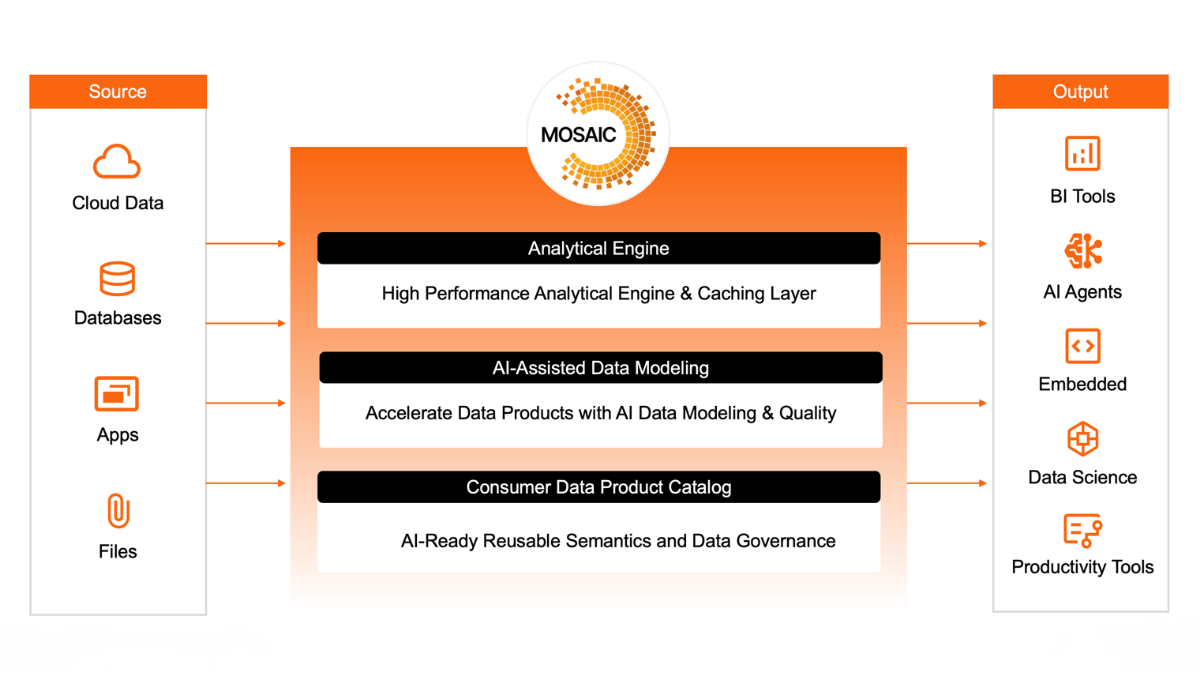
Benefits of a Platform-Native Semantic Layer

Consistent Numbers, Every Time
Define each metric once. Every tool that queries through the semantic layer gets the same number. No more reconciliation meetings. No more “which dashboard is right?” No more presenting two different revenue figures in the same board meeting.

A Data Team That Does Analysis Instead of Arbitration
Without a semantic layer, 79% of enterprise data teams spend more than half their time on data prep rather than generating insights. Organizations that implement Strategy Mosaic typically see a 70%+ reduction in metric reconciliation time, often within the first two months.

Stakeholders Who Actually Trust the Data
Trust isn’t built by having better dashboards. It’s built by having consistent ones. Strategy Mosaic customers frequently report that stakeholder trust in data improves dramatically within weeks of going live.

Self-Service That Actually Works
Self-service analytics has been a goal for over a decade. The reason most self-service initiatives fail isn’t the tools, it’s that the tools don’t agree on what the metrics mean. A semantic layer is the prerequisite. When definitions are consistent, users can pull their own numbers and trust them.
.svg)
An AI Stack You Can Trust
Every AI analytics project that queries raw tables without a semantic layer is producing inconsistent, ungoverned answers at scale. Strategy Mosaic turns AI analytics from a liability into a reliable capability because the AI queries your exact metric definitions, not its best guess at them.
Explore our resources
 The 2026 ROI Survey Report
Discover how Strategy's Mosaic transforms fragmented data into financial success, delivering $3.4M in savings and 551% ROI by standardizing metrics and enhancing analytics for complex enterprises.
 Enterprise Semantic Layer Buyer's Guide
Download the 2026 Enterprise Semantic Layer Buyer's Guide. Seven weighted evaluation criteria, tough vendor questions, a 6–8 week proof of value blueprint, and primary research from 100 data leaders.
 The Semantic Layer: Architecture, Components, and the Foundation for Trustworthy AI
Discover how Strategy Mosaic’s universal semantic layer defines business logic once—ensuring consistent metrics, trusted AI, and governed analytics across every tool and system.
 Semantic Layer Architecture: Why Platform-Agnostic Beats Platform-Native for Enterprise AI
Strategy Software’s platform-agnostic semantic layer closes the Governance Gap, enforcing consistent business definitions across 200+ data sources and every AI agent, not just within one data platform.
What is a semantic layer?
A semantic layer is an architectural layer that sits between your raw data and every system that consumes it — BI tools, AI assistants, notebooks, spreadsheets, and APIs. It translates technical data structures into governed business definitions, ensuring terms like "revenue" or "active users" mean the same thing everywhere, defined once and applied consistently.
Why do organizations need a semantic layer?
Without one, different teams pulling the same data often get different answers. Metric definitions get duplicated across tools, dashboards fall out of sync, new employees waste time figuring out which numbers to trust, and AI assistants produce ungoverned, inconsistent results. A semantic layer eliminates these problems by acting as a single source of truth.
What's wrong with the semantic layers built into tools like Power BI, Looker, or Tableau?
Each of those platforms has its own embedded semantic layer, but those definitions are siloed. The moment an organization uses more than one tool — which nearly every organization does — the definitions start to diverge. A data engineer ends up maintaining the same logic in multiple places, and AI tools or Python notebooks have access to none of it.
What is the difference between a traditional and a modern semantic layer?
Traditional semantic layers live inside individual BI tools and are only accessible to BI users. Modern, platform-native semantic layers are tool-agnostic, centrally maintained, and accessible to BI tools, AI agents, APIs, and notebooks alike. They provide exact, consistent definitions everywhere rather than approximate ones that drift over time.
What are the three common design patterns, and which one works?
The three patterns are: (1) tool-embedded semantics, where each BI tool manages its own definitions (leads to fragmentation); (2) transformation-layer semantics, such as using dbt, where logic lives in version-controlled code but still doesn't expose governed business intent to downstream tools or AI; and (3) platform-native semantic layer, where metric definitions live in one dedicated layer that every system queries through. Only the third pattern scales reliably and keeps AI trustworthy.
Why isn't text-to-SQL enough for AI analytics?
When a language model queries raw tables, it has to infer business logic from column names and table descriptions. It doesn't know your specific revenue definition, what "active users" excludes, or your fiscal calendar — so it guesses, and guesses differently each time. This may look impressive in demos but produces inconsistent answers in production.
How does a semantic layer make AI analytics more reliable?
When AI queries through a governed semantic layer, it executes against your organization's established metric definitions rather than inferring them. The answer it returns is the same answer your data team would give — not an educated guess.
What business benefits does a semantic layer deliver?
Key benefits include consistent numbers across all tools and teams, reduced time spent on metric reconciliation (reportedly 70%+ reduction in the first two months for some organizations), self-service analytics that users can actually trust, and a foundation for reliable AI-powered analytics.
How should an organization start building a semantic layer without getting overwhelmed?
Start small: pick the one metric that causes the most disputes (usually revenue, active users, or churn), define it precisely, get it approved by finance, and deploy it in one high-visibility dashboard. Let usage and demand drive expansion from there, keeping a stable "core" of authoritative definitions separate from newer ones still being validated.
What is Strategy Mosaic?
Strategy Mosaic is Strategy's platform-native semantic layer product. It connects to 200+ data sources, serves consistent definitions to any consumption tool, includes in-memory query acceleration, AI-assisted data modeling, and unified governance (including GDPR, HIPAA, and SOX compliance) through a module called Mosaic Sentine