

Products
Solutions
Ecosystems
Resources
Partners
How to Choose a Vendor-Agnostic Semantic Layer for Enterprise Data Stacks in 2026
A practical framework for evaluating semantic layers for multi-cloud analytics, governed AI, and long-term architectural flexibility.
Companion to: How to Evaluate a Semantic Layer: The 7 Criteria That Actually Matter
Quick Answer
The question isn’t whether a vendor supports many connectors. It’s whether your semantic model still works when the stack changes. The best practice is to choose a vendor-agnostic semantic layer that can keep business definitions, security, and governance consistent across warehouses, BI tools, applications, and AI agents without trapping logic inside one platform.
Why a Semantic Layer Matters Now
Enterprise data infrastructure doesn’t run on a single cloud, warehouse, or BI platform.
Modern tech stacks include multiple systems, teams, and AI interfaces that process and consume data, but they do not share a common layer of business logic.
When definitions for revenue, margin, active customer, or case resolution are defined separately in different tools, inconsistency spreads across the entire data stack.
KPI disputes grow, security rules drift, and AI systems produce answers that are technically plausible but semantically incorrect.
Recent research from Strategy’s 2026 Data, AI & Analytics Trends Survey highlights how common these pains have become:
- More than 95% of data leaders say defining metrics separately in each tool is challenging
- 70% view unified business definitions as the most critical factor for analytics and AI success
- 87% rate visibility into how AI uses enterprise data as very or extremely valuable
Metric drift, inconsistent KPIs, and ungoverned AI outputs are the result of a larger issue:
data logic and context are being re-created across your entire data stack.
Example of a Common Enterprise Pattern:
Finance reviews Booked Revenue in Power BI against a Snowflake model prepared via dbt. Sales checks the same quarter in another tool and lands on a different number. Why? Because the joins, exclusions, and fiscal logic were recreated locally. If another team asks an AI assistant for the answer, it’ll return a third figure, confident in tone but grounded in whichever definition it reached first.
This scenario is not caused by bad data.
It’s the result of business logic defined in multiple places. It’s also why so many organizations learn their “KPIs do not match” long before they recognize it as a structural problem.
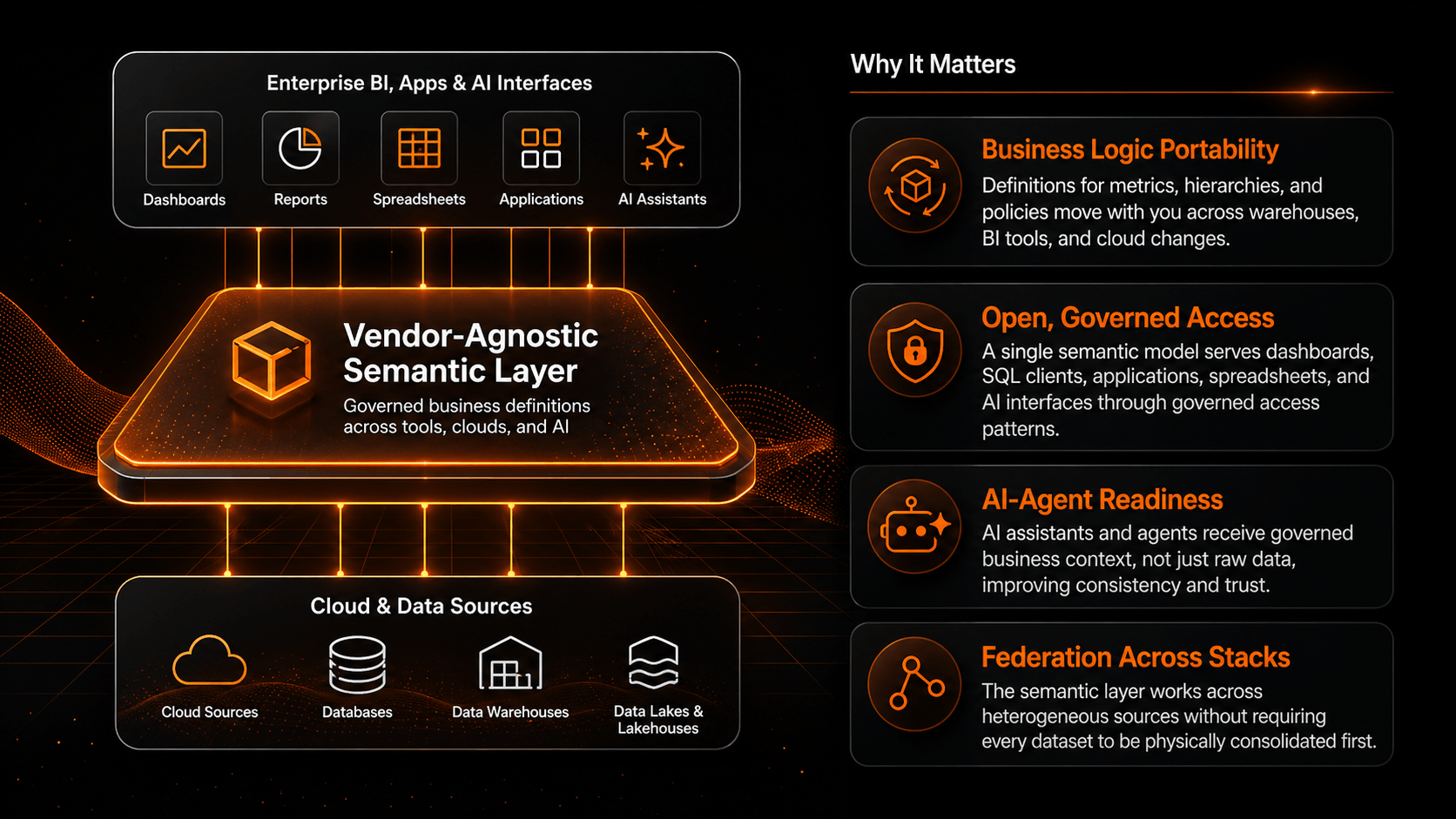
Image 1: Governed semantics across tools, clouds, and AI
The Question Enterprise Data Leaders Must Ask
Most enterprises start their search for a vendor-agnostic semantic layer with the wrong parameters. They often ask whether a vendor works with Snowflake, Databricks, BigQuery, or Power BI. They focus on compatibility first.
It’s not wrong. It’s also not forward-thinking.
The better question to ask is: if my stack changes over the next three years, do my metric definitions, policies, and business logic move with my data?
In modern enterprise environments, vendor-agnostic should mean durable semantics across change, not just broad connector coverage.
That is the real distinction between an embedded semantic feature and an independent semantic architecture. One may be convenient now, but the other is designed to survive platform shifts, new consumption tools, and the rise of AI agents.
What Vendor-Agnostic Means for Enterprise Data Stacks
A truly vendor-agnostic semantic layer should deliver five core capabilities:
- Portability of business logic: Metric, hierarchy, and policy definitions should never be locked inside a single warehouse, BI tool, or cloud account.
- Federation across platforms: A semantic layer must operate across heterogeneous sources without assuming every critical dataset needs to be physically consolidated before analysis.
- Open standards and interoperability: The model should be accessible through standard interfaces such as SQL, JDBC/ODBC, REST APIs, and, where relevant, XMLA, MDX, or DAX. Support for open interoperability efforts like OSI is increasingly important, as are Git-backed definitions that can be versioned, reviewed, and promoted through software-style workflows rather than trapped in a proprietary interface.
- Governance that travels with meaning: Security, lineage, ownership, and change control should move with the semantic definition itself, not be rebuilt in every consuming tool. Policy enforcement, lineage, and approval workflows should apply consistently whether the model is used in a dashboard, a SQL client, or an AI interface.
- AI-agent readiness: A 2026-ready semantic layer must serve more than dashboards. It should provide governed semantic context to AI assistants and agents, with permissions, auditability, and policy enforcement intact.
If “vendor-agnostic” only means supporting multiple connectors, the bar is far too low.
Enterprise buyers should focus less on connector counts and more on whether business logic remains stable as the environment evolves.
A Semantic Layer Is Not a Metrics Layer
One of the most common points of confusion is the difference between a semantic layer and a metrics layer. The terms are related, but they are not interchangeable.
A metrics layer focuses primarily on calculation logic. It defines how a measure such as revenue, net retention, gross margin, or average order value is computed.
That’s valuable, but it is only part of what enterprise buyers need.
A semantic layer doesn’t just govern metrics. It captures hierarchies, ownership, security, versioning, downstream consumption, and the delivery of governed context across BI tools, applications, spreadsheets, and AI systems.
Here’s how both layers compare to a tool-specific semantic feature:
Approach | Best at | Limitation | Best for | AI Readiness |
Tool-specific semantics | Local consistency in one warehouse or BI tool | Logic is platform-focused; portability is limited | Single-platform teams | Supports local copilots, but context stays platform-scoped |
Metrics layer | Metric formulas for code-first workflows | Narrower on entities, governance, and multi-consumer delivery | Engineer-led data teams | Grounds metric-aware analytics, but narrower on policy and agent delivery |
Independent vendor-agnostic semantic layer | Governed definitions across BI, apps, spreadsheets, and AI | More evaluation up front, but more durable semantics | Multi-tool enterprises | Best suited to governed context across BI and AI consumers |
What a Governed Metric Actually Carries
A governed metric is more than a calculation. It carries the business, technical, and governance context needed to make that metric reusable across tools, teams, and AI interfaces.
DEFINITION | A business definition and formula, not just a field name |
JOINS | Reusable joins to entities such as Customer, Product, Geography, or Account |
HIERARCHIES | Hierarchies and time logic such as fiscal calendars, year-to-date views, or parent-child rollups |
SECURITY | Role-aware security and policy enforcement, including row- and column-level controls |
GOVERNANCE | Ownership, version history, and change control for safe collaboration |
DELIVERY | Reusable delivery across BI tools, SQL interfaces, applications, and AI agents |
This is why an enterprise semantic layer needs to govern more than metric formulas. It must also preserve the relationships, policies, and context that make those metrics trusted wherever they are consumed.
Why Data Virtualization Alone Doesn’t Solve Semantic Consistency
Another common mistake is to assume that data virtualization and semantic consistency are the same thing. They are not.
Data virtualization solves a connectivity problem. It allows teams to query across multiple sources without physically moving all data into one location. That can be extremely valuable in heterogeneous environments, especially when latency, cost, or operational constraints make centralization impractical.
But virtualization does not automatically enforce shared business meaning.
If multiple BI tools or AI agents consume the same virtualized data and each applies different calculation logic, the organization still ends up with multiple versions of the truth.
A vendor-agnostic semantic layer solves the meaning problem above the connectivity layer by applying governed definitions, metrics, relationships, and policies consistently across every consuming tool.
That means teams can query distributed data sources while still using the same business terms, role-aware access rules, lineage, and approved logic in dashboards, SQL clients, applications, and AI agents.
When evaluating vendors, ask whether the semantic layer can preserve meaning across virtualized, centralized, and hybrid data architectures, not just whether it can connect to them.
The 7 Questions to Ask When Evaluating a Vendor-Agnostic Semantic Layer
When evaluating vendor-agnostic solutions, the key questions become:
- Does the semantic model remain independent and federated even as warehouses, clouds, or BI tools change?
- Can AI accelerate modeling while preserving human governance and explainability?
- Does the platform deliver enterprise-grade semantic depth — entities, hierarchies, time intelligence, and security — that travels with the definition?
- Is it built on open standards and universal access patterns rather than proprietary interfaces?
- Does governance stay active and operational across all consumers, including AI agents?
- Can it safely serve governed context to copilots and agents without amplifying ambiguity?
- Does it deliver production-grade performance, scalability, and cost efficiency at enterprise concurrency?
These questions shift the evaluation from “how many connectors?” to “will my business logic and governance survive the next platform change and continue to serve both human and AI consumers reliably?”
For the full framework, read How to Evaluate a Semantic Layer: The 7 Criteria That Actually Matter.
Why AI Raises the Stakes for Semantic Consistency
AI changes the buying criteria because large language models are very good at producing answers that sound plausible. Without governed context, they can be syntactically correct and semantically wrong at the same time.
An AI agent may have access to a warehouse and still lack the business definitions required to interpret it correctly. If Active Customer, Booked Revenue, or Net Margin are ambiguous across systems, the model will amplify that ambiguity.
That’s why the semantic layer is increasingly becoming the governed context layer for enterprise AI, not just a consistency layer for dashboards.
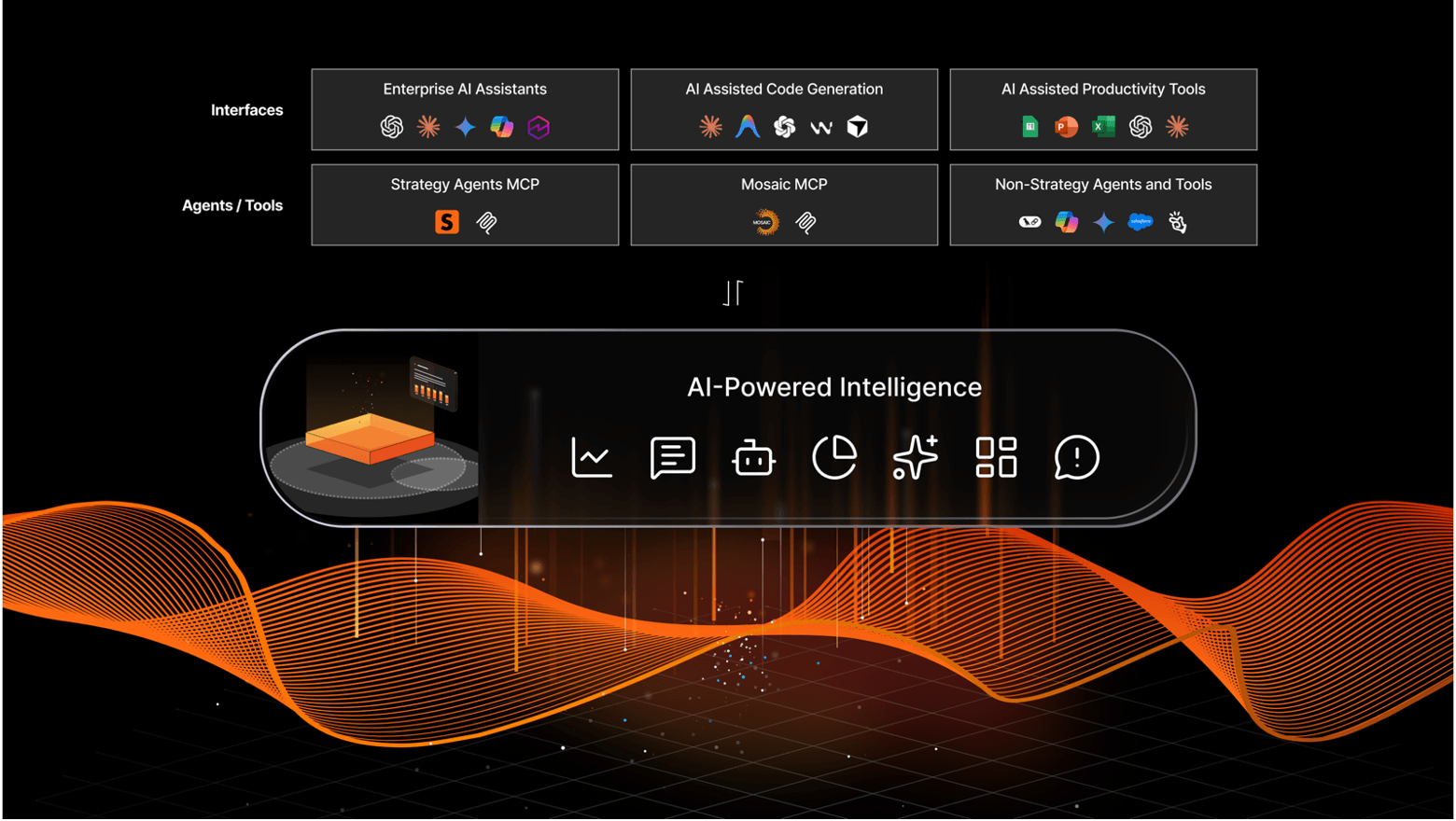
Image 2: Governed context for enterprise AI interfaces
How to Use the Questions Across Enterprise Stacks
Those seven questions become much easier to answer when you test them against real data stacks. Use these examples to test whether a vendor can preserve the same definitions, joins, permissions, and performance expectations across real consumption paths. Here are two common examples:
- In a Snowflake + dbt + Power BI environment, dbt may prepare core transformations, while the semantic layer may define reusable metrics such as Customer, or Booked Revenue. Power BI then consumes these definitions through a governed interface rather than recreating them in each dataset. This is where platform independence, semantic depth, accessibility, and performance become testable.
- In a Databricks + Looker environment, curated data may live in Databricks, dashboards in Looker, and AI agents may access the same model through SQL endpoints, APIs, or semantic connectors. If role-aware filters, governed joins, and business definitions remain consistent across every interface, it means that all BI users and AI agents are operating from the same semantic logic.
Enterprises are moving toward independent, universal semantic layers that treat semantics as durable infrastructure rather than platform features. Strategy Mosaic is one example of that direction. It’s designed for heterogeneous data platforms and consumption tools, with a focus on governed semantics, open access, AI readiness, and portability for technical and business users.
How to Audit Your Enterprise Data Stack Today
A practical proof-of-value approach: pick one KPI that does not match across teams, tools, or reports. Next, validate it across:
- at least two consumption surfaces
- two user groups
- one real governance requirement such as row-level security or audited AI access
This will force the vendor to prove semantic consistency. It will also reveal whether the platform offers a durable semantic foundation or just a thin layer of convenience on top of a system.
For CIOs and Directors of Data Engineering, that is the most practical path forward: start small, prove consistency, prove governance, then expand.
What’s Your First Step?
If your team is evaluating semantic layers now, start with the architecture question: what happens to your business definitions when tools, platforms, and AI use cases change? Then run a focused proof of value on one KPI that does not match across teams, tools, or reports.
Download the 2026 Enterprise Semantic Layer Buyer's Guide
Get the full evaluation checklist, maturity model, vendor questions, and proof-of-value blueprint.
Frequently Asked Questions
What is a vendor-agnostic semantic layer?
A vendor-agnostic semantic layer keeps business definitions, metrics, and governance independent from any single warehouse, BI tool, or cloud platform so those definitions can be reused consistently across a changing enterprise stack.
Why does AI need a semantic layer?
AI needs a semantic layer because data access alone is not enough. AI systems also need governed definitions for how the business interprets revenue, customer, margin, and other shared concepts. Without that context, answers can sound right while still being wrong.
How is a semantic layer different from a metrics layer?
A metrics layer focuses on calculation logic. A semantic layer is broader: it includes metrics, hierarchies, relationships, governance, ownership, lifecycle control, and delivery of governed context to multiple consumers, including AI agents.
Can a semantic layer and data virtualization work together?
Yes. Data virtualization helps teams query across sources without moving data. A semantic layer ensures that the resulting data is interpreted consistently across tools and agents. Many enterprises use both capabilities together.
What should CIOs prioritize in an evaluation?
CIOs should prioritize portability, governance, AI readiness, and time-to-value. The goal is not simply better modeling. It is lower lock-in, lower semantic risk, and a more durable data architecture.
Do we need to consolidate all data into one warehouse before using a semantic layer?
Not necessarily. In many enterprises, a semantic layer is most valuable precisely because the environment is heterogeneous. The better test is whether the platform can apply governed definitions consistently across the sources you already operate, while supporting selective consolidation where it improves performance or cost.
How does a semantic layer relate to a data catalog or governance tool?
A data catalog describes and documents data assets. A governance tool may help with policy management, stewardship, lineage, or access administration. A semantic layer complements those systems by operationalizing business meaning at the point of use. It does not replace governance disciplines; it makes governed definitions executable across analytics and AI interfaces.
Does a semantic layer replace dbt, BI models, or warehouse-native semantic features?
Usually no. In many stacks, dbt remains the transformation layer, BI tools remain the consumption layer, and warehouse-native capabilities still serve local use cases. The role of an enterprise semantic layer is to create a governed, reusable definition layer across those systems so shared business logic does not have to be rebuilt in each one.

Henry Guo
Henry Guo is Director of Outbound Product Management at Strategy, driving go-to-market and turning customer insights into discovery and validation for its semantic layer and AI products. With 15+ years in AI, data and security, he helps ship trusted secure enterprise platforms with measurable value.
Content:
- Why a Semantic Layer Matters Now
- The Question Enterprise Data Leaders Must Ask
- What Vendor-Agnostic Means for Enterprise Data Stacks
- A Semantic Layer Is Not a Metrics Layer
- Why Data Virtualization Alone Doesn’t Solve Semantic Consistency
- The 7 Questions to Ask When Evaluating a Vendor-Agnostic Semantic Layer
- Why AI Raises the Stakes for Semantic Consistency
- How to Use the Questions Across Enterprise Stacks
- How to Audit Your Enterprise Data Stack Today
- What’s Your First Step?
- Frequently Asked Questions
Related posts
Learn the 7 criteria that separate enterprise-grade semantic layers from everything else, including platform independence, AI readiness, governance, and practical vendor tests.
Henry Guo
April 22, 2026

Strategy Software’s platform-agnostic semantic layer closes the Governance Gap, enforcing consistent business definitions across 200+ data sources and every AI agent, not just within one data platform.

Lauren O’Connor
April 15, 2026

Google Next ’26 validated that agentic BI needs a semantic layer. Learn why Strategy Mosaic delivers governed, vendor-neutral semantics for trusted AI analytics.

Jae Berlik
April 29, 2026

Discover how Strategy Mosaic’s universal semantic layer defines business logic once—ensuring consistent metrics, trusted AI, and governed analytics across every tool and system.
Lauren O’Connor
April 9, 2026