

Products
Solutions
Ecosystems
Resources
Partners
Mosaic: The enterprise-grade Universal Semantic Layer
Turn your data into consistent, governed insights that your entire organization trusts. Mosaic combines a high-performance analytical engine, integrated governance, and AI-assisted data modeling to deliver consistent, trusted data across every BI tool, AI agent, and application.
Why Mosaic is different
The cost of data fragmentation isn't just conflicting numbers—it's the massive financial and human cost of being locked into a single platform. Mosaic breaks the dependence by centralizing your business logic above the data layer.

Universal Connectivity & Access
Connect seamlessly to every cloud and database without vendor lock-in. Access the semantic layer using any protocol: SQL, DAX, MDX, and REST API access.

AI Readiness & Trust
Enterprises struggle with AI adoption due to siloed, inconsistent data. Create AI-ready semantics for faster time-to-value and reliable AI outcomes you can trust.

Vendor-Independent Logic
Build on rich semantics and link new models to existing ones—reusing metrics, logic, and business rules to eliminate rework, ensure consistency, and accelerate AI-ready data products.

Replace BI Tools Without Rebuilding
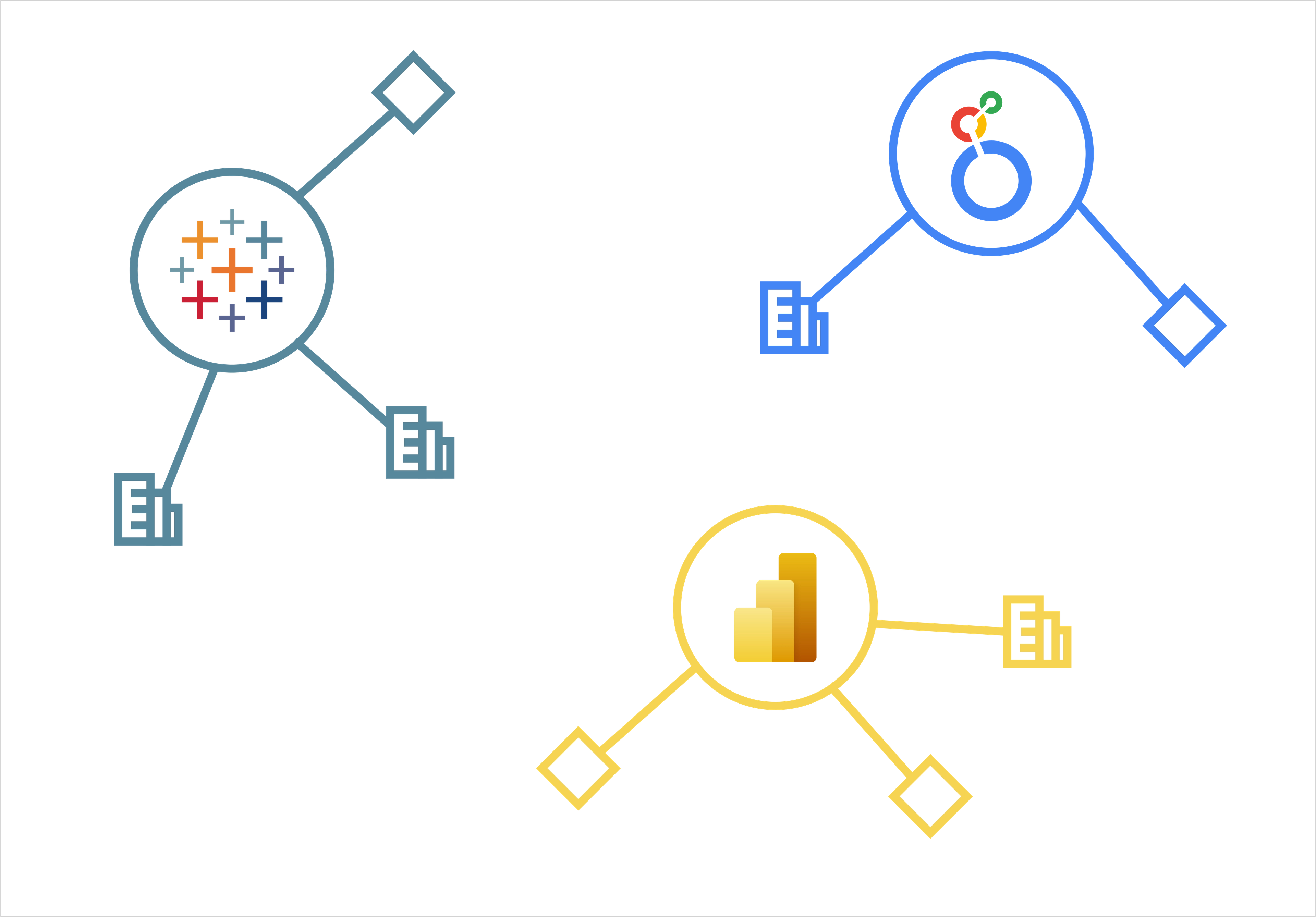
Your business logic becomes a portable asset, protecting your metric definitions even if you switch your frontend BI platform. Replace a BI tool without losing your metric definitions.
.svg)
Move Across Clouds & Databases
Easily change clouds or migrate databases without rewriting a single metric definition or losing business context. Bring your own cloud, or change clouds anytime.

Data Governance & AI Observability
Get real-time visibility into model usage, anomalies, and audit trails across every data action. Proactively monitor compliance, control cloud costs, and ensure every AI system is powered by trusted, auditable, context-aware data.
Create reusable AI-powered data products
Built into the Mosaic platform, Mosaic Studio eliminates the data modeling bottleneck, so business teams can create self-service, governed, production-ready data products in weeks, not months.
- Fill missing values automatically
- Detect relationships and hierarchies
- Generate reusable metrics in plain language
- Merge governed and ungoverned data safely
- What once took six months and consultants can now be done in weeks with your business team.

Built for business: 25+ years of battle-tested semantics
A robust semantic layer goes beyond modeling data, it encodes the business logic, hierarchies, and access controls your enterprise depends on. The result: consistent, secure, and trusted metrics across every tool and user.
.svg)
Multi-form attributes

Hierarchies & drill paths

Dynamic joins & filters

Level-aware metrics

Custom calendars

Localization rules

Enterprise security model

Rich metadata inheritance
Guide
The Enterprise Semantic Layer Buyer’s Guide
Discover how to evaluate semantic layer solutions with confidence—align stakeholders, ask the right questions, and build a foundation for trusted analytics and AI.
_copy.webp&w=3840&q=100)
Whitepaper
Strategy Mosaic: Unifying fragmented data for intelligent enterprise decisions
Discover how Strategy Mosaic creates a Universal Semantic Layer to harmonize data, accelerate insights, and power AI—without costly overhauls. Learn how enterprises are turning chaos into clarity.
.png)
Data connectivity

Connecting to Your Databases in Mosaic

Integrating Mosaic with Tableau

Integrating Mosaic with Power BI

Integrating Mosaic with DB Client
What is a universal semantic layer?
A universal semantic layer is the single source of truth for your organization's data definitions, ensuring that 'Revenue' means exactly the same thing whether it's calculated in Salesforce, analyzed in Tableau, or processed by your AI models.
Sitting between your data sources and consumption tools, it translates raw data into trusted business concepts like 'Active Customer' or 'Margin' with identical calculations and values guaranteed across every team, every platform, and every use case.
Unlike semantic layers trapped inside individual BI tools or data warehouses, a universal semantic layer governs your entire data ecosystem, enforcing consistent definitions regardless of which cloud, database, or application asks the question. No more finance reporting different numbers than marketing. No more “Which dashboard is correct?
How does Strategy Mosaic work?
Strategy Mosaic is a universal semantic layer that connects to your organization's data sources: including Snowflake, Databrucks, BigQuery, Redshift, Azure, Synapse, SAP, Oracle, Salesforce, Workday, and on-premises databases, without moving or replicating a single byte.
Once connected, Mosaic Studio uses AI-powered modeling to automatically generate attributes, hierarchies, and metrics from your data, delivering in hours what traditionally takes weeks of manual work. Those definitions are then enforced across every connected BI tool, AI agent, and application via SQL, DAX, MDX, and REST APIs: meaning Tableau, Power BI, Excel, and custom applications all work from the same governed definitions automatically.
Meanwhile, Mosaic Sentinel monitors your data ecosystem in real time, logging every access event, flagging anomalies, detecting PII exposure, and maintaining a complete audit trail of who accessed what data, when.
What are the benefits of Strategy Mosaic?
1. Your Business Logic, Protected Across Every Platform and Every Change: When your semantic layer is built into a single platform, your business definitions are only as portable as that vendor allows. Mosaic is a standalone, platform-agnostic layer that governs your definitions of Revenue, Margin, and Customer identically across every tool, every cloud, and every AI agent. And unlike newer semantic layer tools, Mosaic is backed by 35+ years of enterprise semantic technology, meaning it handles the complexity of real enterprise data: fiscal calendars, multi-currency hierarchies, time transformations, and security models that most tools are still building toward. Your logic is protected today, and it will still be intact when your infrastructure changes tomorrow.
2. The Only Semantic Layer Built for Everyone, Not Just Engineers: Most semantic layers are built for data engineers and require SQL, YAML, or code to use. Mosaic Studio lets business users define new metrics in plain language, build and modify models without writing a single line of code, and govern data without filing a ticket. When business users can own their own definitions, your data team stops being a bottleneck and starts being a strategic asset.
3. Governance That Scales as Fast as Your AI: As AI agents proliferate across your organization, the question isn't just "is my data accurate?" it's "Do I know what my AI accessed, at what cost, and whether it touched sensitive data?" Mosaic Sentinel answers all three in real time. It's the only semantic layer with governance intelligence built natively into the platform, not added on after the fact, giving you the confidence to scale AI without scaling risk.
How does Strategy Mosaic compare to semantic layers built into Snowflake or Databricks?
Snowflake and Databricks are exceptional data platforms. But their semantic layers are built to keep you inside their ecosystem. Definitions created there don't travel cleanly to Tableau, Power BI, or your AI agents without custom work.
Mosaic sits above your data platforms as an independent layer. Your definitions of Revenue, Margin, and Customer are governed identically whether the query comes from a BI tool, an AI agent, or a Python notebook, regardless of which warehouse is underneath. When you migrate from Snowflake to Databricks, or run both simultaneously, your business logic stays exactly as it was. Nothing has to be rebuilt.
That's the difference between a semantic layer built to serve a platform and one built to serve your organization.
How does Strategy Mosaic compare to other standalone semantic layers like AtScale or dbt Semantic Layer?
AtScale and dbt are capable tools, and they've made semantic layers more accessible. Where Mosaic differs is depth and governance.
Mosaic is built on 35+ years of enterprise semantic technology, meaning it already handles what most semantic layer tools are still building toward: fiscal calendars, multi-currency hierarchies, time transformations, and complex enterprise security models proven across Fortune 500 deployments.
And while most semantic layers focus on metric consistency, Mosaic adds Sentinel, a real-time governance layer that monitors every data access event, detects PII exposure, flags anomalies, and maintains a full audit trail across every user, agent, and application. That's not a bolt-on. It's native to the platform.
For organizations scaling AI, that distinction matters. Metric consistency gets you started. Governance at scale keeps you compliant.
I'm already using Snowflake, Databricks, or Power BI — where does Mosaic fit in my stack?
Mosaic works with your existing stack, not against it. It sits above your data platforms and BI tools as an independent governance layer, connecting to your data where it already lives, without moving or replicating it. Once connected, you define your business metrics, hierarchies, and logic once inside Mosaic. From that point forward, every tool, application, team, and AI agent in your organization references those same governed definitions whether they're working in Power BI, Tableau, Excel, a Python notebook, or an AI agent. Your data stays where it is. Your definitions travel everywhere.
Does Strategy Mosaic replace my existing BI tools or data warehouse?
No, Mosaic is designed to work with the tools you already have. Your data stays where it lives. Your teams keep using Power BI, Tableau, Excel, and Google Sheets. Mosaic sits above all of it as an independent governance layer, ensuring every tool gets the same trusted, governed definitions. If you choose to change a BI tool or migrate to a new data platform in the future, your metric definitions stay intact and your investment in business logic travels with you regardless of what changes underneath it.
Can Strategy Mosaic be used for both BI and AI/ML?
Yes, and this is one of Mosaic's core differentiators. Gartner projects that by 2028, 60% of agentic analytics projects relying solely on MCP without a semantic layer will fail. Mosaic is the semantic layer that makes AI reliable at enterprise scale.
With Mosaic, AI agents, including those built on ChatGPT, Claude, Copilot, and Gemini, can query governed metrics directly through Mosaic's MCP server. Every consumer, human or machine, operates on the same certified metric definitions, security policies, and relationships. Mosaic provides the answers that you need, in the applications you choose, built on reliable data every time.
How does Mosaic handle data security and access control?
Security is built into Mosaic's architecture at every level, not added on after the fact. Mosaic enforces row-level security filters, object-level access controls, and granular user privileges, ensuring every user only sees the data they are authorized to see, regardless of which tool they are using to access it. Security policies are defined once in Mosaic, and travel with the data across every connected application, BI tool, and AI agent.
Mosaic Sentinel adds a real-time governance layer on top, detecting sensitive data access outside normal patterns, flagging credential exposure, and maintaining a comprehensive audit trail of every data action for compliance and regulatory reporting. For organizations in regulated industries, Mosaic supports FedRAMP-compliant and air-gapped deployments, and is actively used by federal defense agencies where data security requirements are among the most stringent in the world.
How long does it take to get started with Mosaic?
Most organizations are connecting their first data sources and generating initial semantic models within days, not months. Mosaic Studio's AI-powered modeling scans your data and automatically creates attributes, hierarchies, and metrics, eliminating the manual configuration work that traditionally stretched implementations into multi-month projects. From there, teams can be consuming governed data through their existing BI tools and AI agents within weeks. What once took six months and a team of consultants, can now be done by your own business team in a fraction of the time.
Is Strategy Mosaic installed on-premises or in the cloud?
Mosaic supports flexible deployment across both public and private clouds. It is available natively on cloud marketplaces and can be deployed inside regulated environments for organizations with strict security requirements, including federal government and defense customers. Your data never has to move from where it already lives, regardless of how Mosaic is deployed.